IOT (internet of things) Course
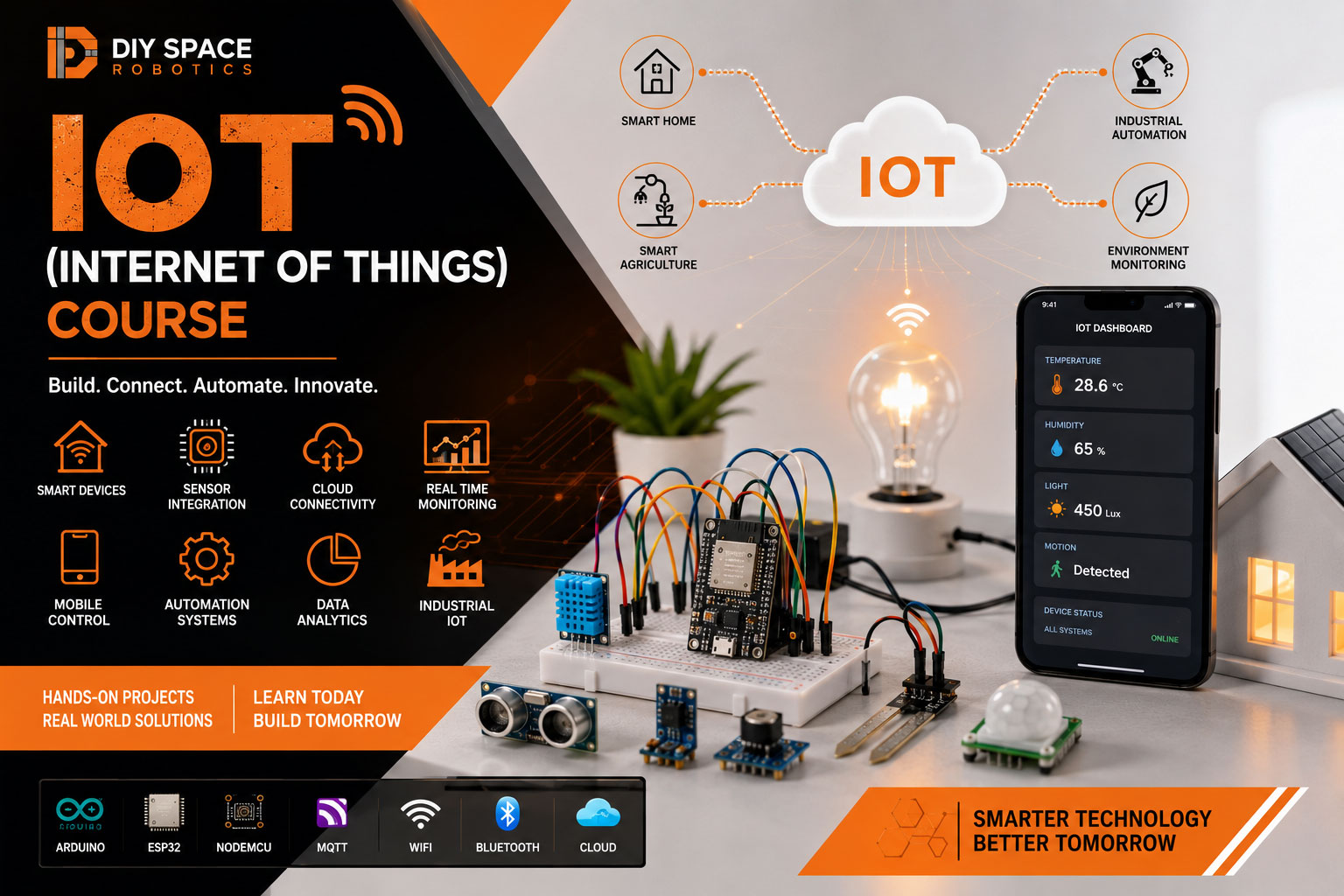
IoT (Internet of Things) Course
The world is becoming increasingly connected. From smart homes and wearable devices to industrial automation systems and intelligent agriculture solutions, the IOT (internet of things) Course is transforming how people interact with technology.
Every day, billions of connected devices collect information, communicate with each other, and perform automated actions. Smart lighting systems, health monitoring devices, security systems, and environmental sensors are all examples of modern IoT Applications.
The IoT Course at DiySpace Robotics is designed to help learners understand how these technologies work and how smart systems are built. Through practical projects and hands-on learning, students explore the technologies behind connected devices, automation systems, and real-time monitoring solutions.
Whether you are a student, engineering learner, technology enthusiast, or professional, this Internet of Things Course provides valuable skills that are increasingly relevant in today’s technology-driven world.
How Smart Devices Communicate and Make Decisions
At its core, the IoT (Internet of Things) Course connects physical devices to the internet so they can collect, share, and process information.
Sensors gather real world data such as temperature, humidity, motion, light levels, and environmental conditions. This information is transmitted through wireless communication technologies to cloud platforms or connected systems.
The data can then be analyzed in real time, allowing devices to respond automatically. For example, a smart irrigation system can activate watering when soil moisture drops below a certain level, while a smart home system can control lighting based on occupancy.
Understanding this complete workflow is one of the most important objectives of learning IoT Development.
Learning Beyond Theory
The IoT training experience at DiySpace Robotics focuses on practical implementation rather than memorization.
Students work directly with development boards, sensors, wireless modules, and cloud connected systems. Each topic is reinforced through experiments, programming activities, and guided projects.
Learners gain experience in connecting hardware with software, collecting real world data, creating automation workflows, and developing intelligent systems that solve practical problems.
This project-based approach helps learners build confidence while developing real engineering and technology skills.
Technologies That Power Modern IoT Solutions
Arduino and IoT
Learn how Arduino boards interact with sensors and communication modules to create connected devices and automation projects.
ESP32 Development
Explore one of the most popular IoT development platforms featuring built-in WiFi and Bluetooth connectivity.
NodeMCU Programming
Understand how NodeMCU boards can be used for cloud-connected applications and remote monitoring systems.
Sensor Integration
Work with temperature, humidity, motion, distance, light, and environmental sensors used in modern IoT solutions.
Wireless Communication
Learn how devices communicate through WiFi, Bluetooth, and other networking technologies.
Cloud Platforms
Understand how data is transmitted, stored, processed, and visualized using cloud services.
Mobile App Connectivity
Discover how smartphones and mobile applications can monitor and control connected devices.
Real Time Monitoring Systems
Build systems that collect and display live data from sensors and connected equipment.
Automation Workflows
Learn how devices can automatically perform actions based on predefined conditions and sensor inputs.
Designing Systems That Think and Respond
One of the most exciting aspects of IoT is the ability to create systems that make intelligent decisions based on real-world information.
Students work on Smart Home Automation projects where lighting, appliances, and monitoring systems respond automatically to environmental conditions or user commands.
Through Weather Monitoring Systems, learners collect and analyze temperature, humidity, and atmospheric data while understanding how connected sensors communicate with cloud platforms.
Projects involving Remote Energy Monitoring help students understand how smart devices can track power usage and improve efficiency.
Learners may also explore Smart Agriculture Solutions, Environmental Monitoring Systems, and Industrial Sensor Networks that demonstrate how IoT technology is solving real-world challenges across different industries.
These projects provide valuable experience in designing, building, testing, and improving connected systems.
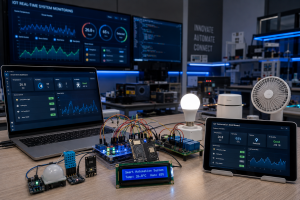
The Bridge Between Hardware and Cloud Technologies
The Internet of Things combines several important technology disciplines into a single ecosystem.
Students gain exposure to Electronics, where sensors and devices collect information from the physical environment. They learn Embedded Systems Programming, which enables hardware to process data and make decisions.
Networking concepts help devices communicate with each other and with cloud platforms. Cloud technologies provide storage, visualization, and remote access to information.
Automation systems then use this data to perform intelligent actions, creating complete IoT solutions that connect the physical and digital worlds.
Who Should Explore IoT Technology?
This course is ideal for learners interested in smart technologies, connected devices, and automation systems.
- Students
- Engineering Learners
- Arduino Enthusiasts
- Robotics Students
- Embedded Systems Developers
- Teachers & STEM Educators
- Technology Professionals
- Automation Engineers
- Startup Innovators
- Makers & Hobbyists
No prior IoT experience is required.
Certification & Practical Portfolio Development
Upon successful completion of the course, participants receive a Course Completion Certificate from DiySpace Robotics.
More importantly, learners build a portfolio of practical IoT projects that demonstrate their ability to work with sensors, cloud platforms, automation systems, and connected devices.
These projects help showcase technical capabilities while providing valuable experience for future educational and professional opportunities.
Why IoT Is One of the Fastest Growing Technology Fields
The growth of Industry 4.0, digital transformation, and connected technologies has significantly increased the demand for IoT expertise.
Modern industries rely on real-time monitoring, predictive maintenance, automation systems, and intelligent data collection to improve efficiency and decision-making.
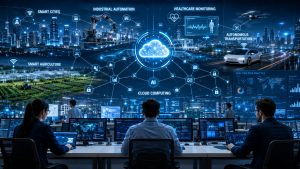
Smart cities, connected transportation systems, healthcare monitoring platforms, and industrial automation solutions are creating new opportunities for engineers and technology professionals.
As artificial intelligence, cloud computing, and IoT continue to converge, connected systems will play an even greater role in shaping the future workforce and driving technological innovation.
FAQs
What is IoT?
IoT (Internet of Things) refers to connected devices that collect, share, and process data through networks and cloud platforms.
What is an IoT (Internet of Things) Course ?
An IoT (Internet of Things) Course teaches learners how to build smart connected systems using sensors, microcontrollers, wireless communication, and cloud technologies.
Can beginners learn IoT?
Yes. Beginners can start with basic electronics and programming concepts before progressing to advanced IoT applications.
What is ESP32?
ESP32 is a powerful microcontroller with built-in WiFi and Bluetooth commonly used for IoT development.
What is NodeMCU?
NodeMCU is a WiFi enabled development board based on the ESP8266 microcontroller, widely used in IoT projects.
Do I need programming experience?
No. The course introduces programming concepts gradually through practical activities.
What projects will I build?
Projects may include smart home systems, weather stations, automation systems, monitoring devices, and IoT-based robotics applications.
How is IoT used in smart homes?
IoT allows devices such as lights, security systems, sensors, and appliances to communicate and operate automatically.
How is IoT used in agriculture?
IoT helps monitor soil conditions, irrigation systems, environmental factors, and crop health through connected sensors.
What sensors are used in IoT?
Common sensors include temperature, humidity, motion, distance, light, gas, pressure, and environmental sensors.
What is MQTT?
MQTT is a lightweight communication protocol commonly used for IoT devices and real-time data exchange.
What is cloud connectivity in IoT (Internet of Things)?
Cloud connectivity allows devices to send, store, analyze, and access data remotely through cloud platforms.
Can school students learn IoT?
Yes. Students interested in STEM and technology can successfully learn IoT concepts through guided training.
What are the career opportunities in IoT?
Career opportunities include IoT Developer, Automation Engineer, Embedded Systems Developer, Robotics Engineer, and Smart Systems Specialist.
Instructor

You May Like
3D Designing and Printing Course
3D Designing and Printing In today’s innovation driven world, 3D …

Image Processing Course
Image Processing Course Learn Computer Vision at DiySpace In today’s …
Electronics Course
Electronics Course Practical Electronics Training Technology is evolving faster than …